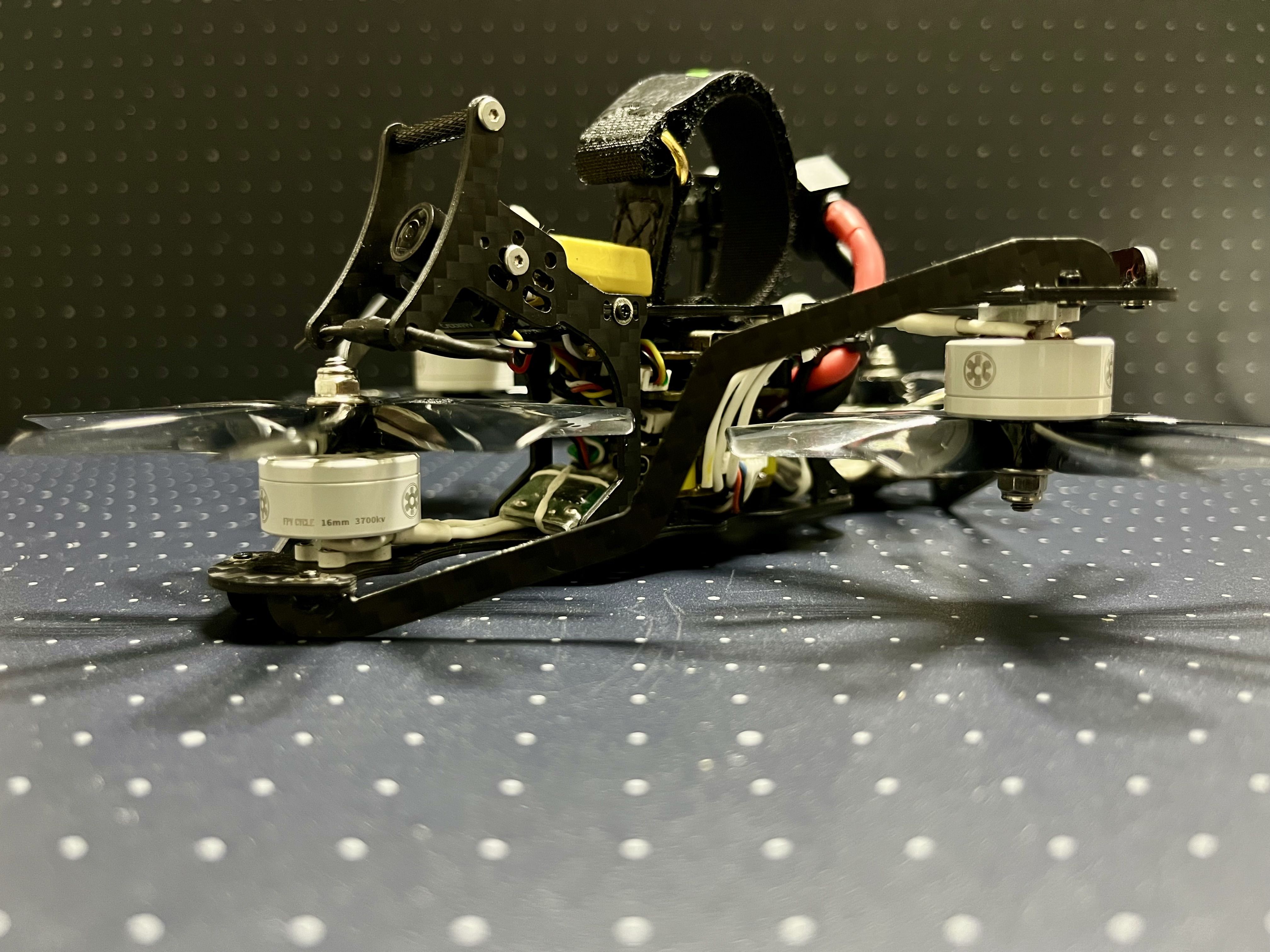
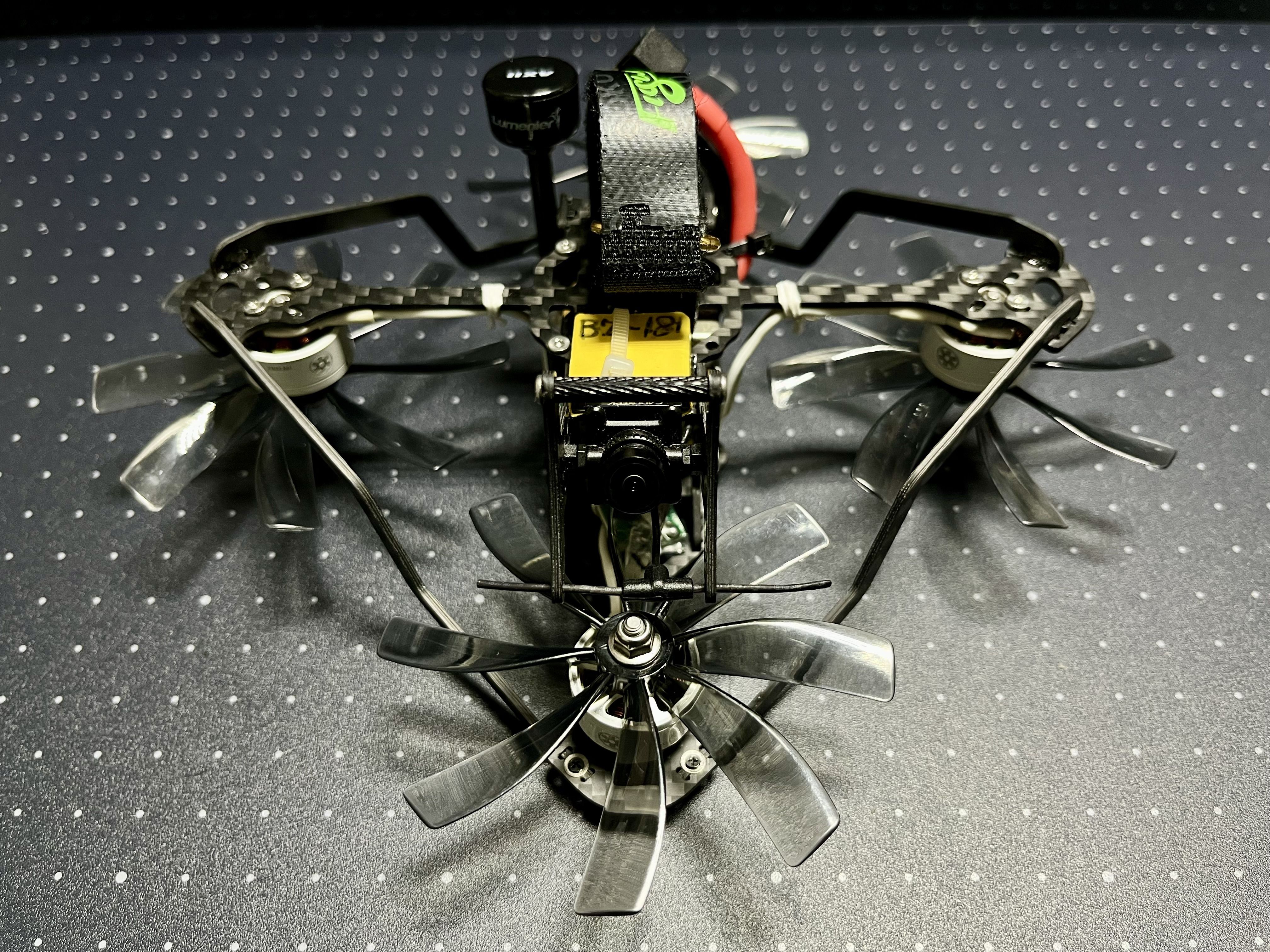
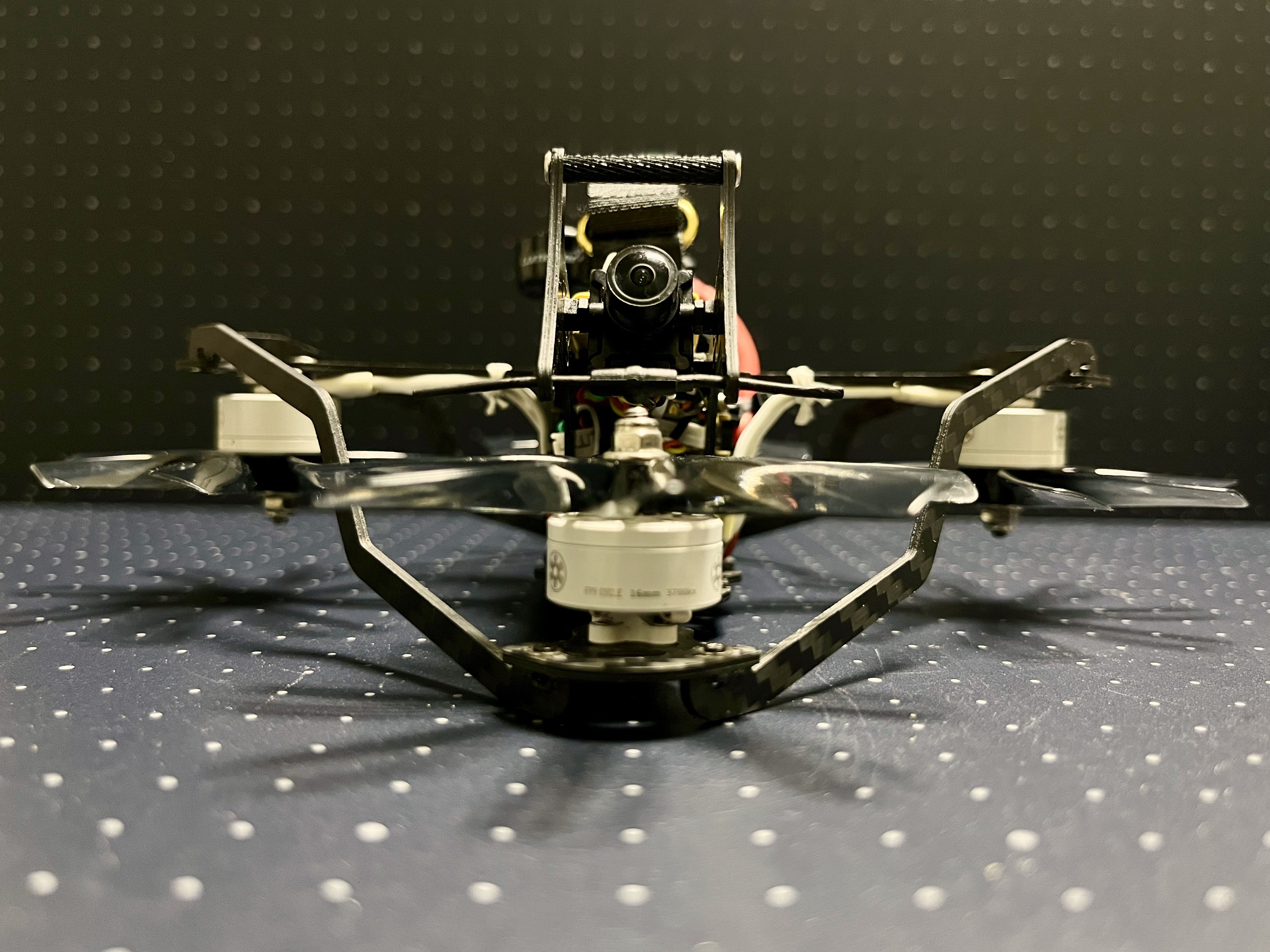
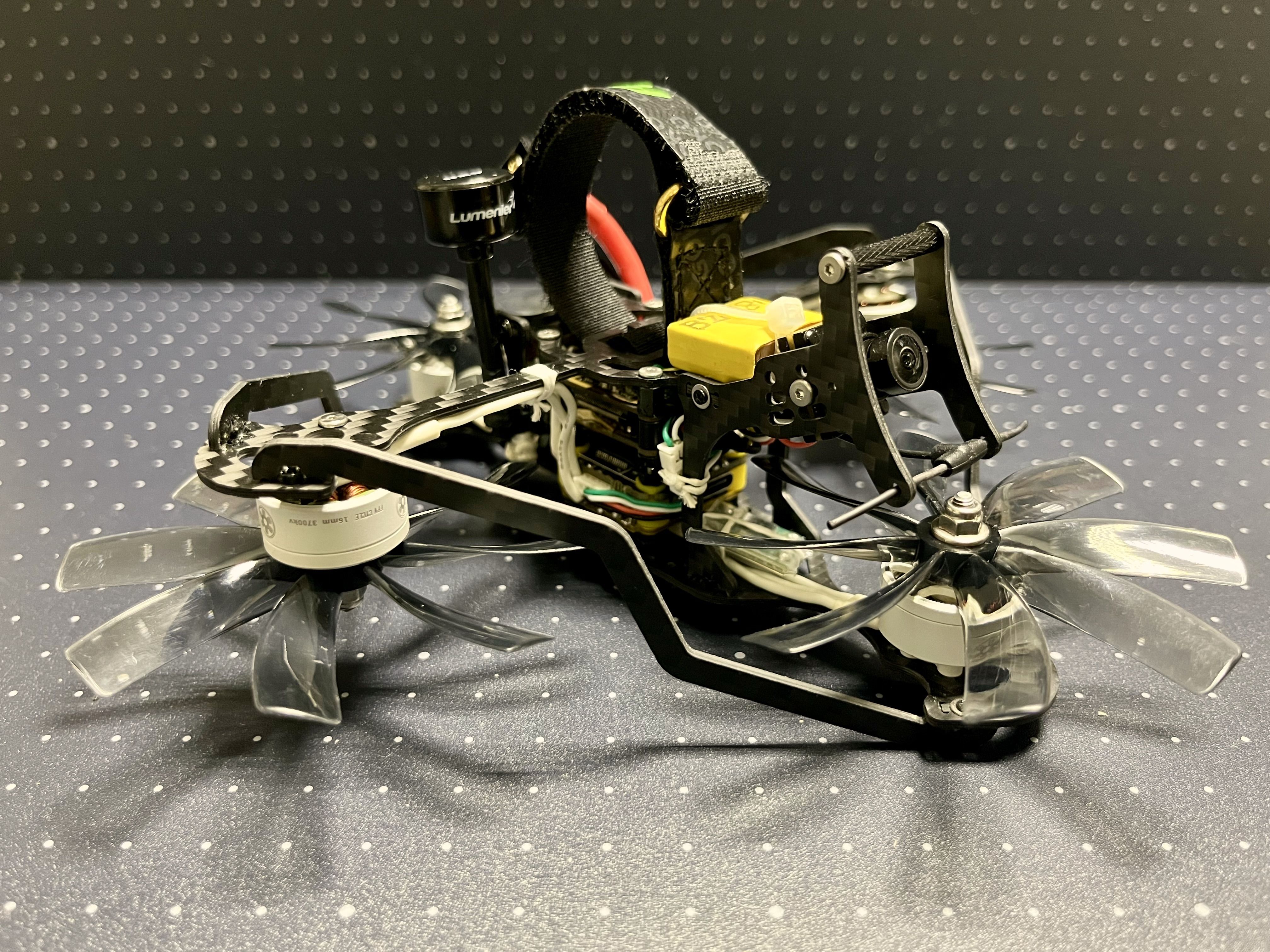
Apie šį buildą
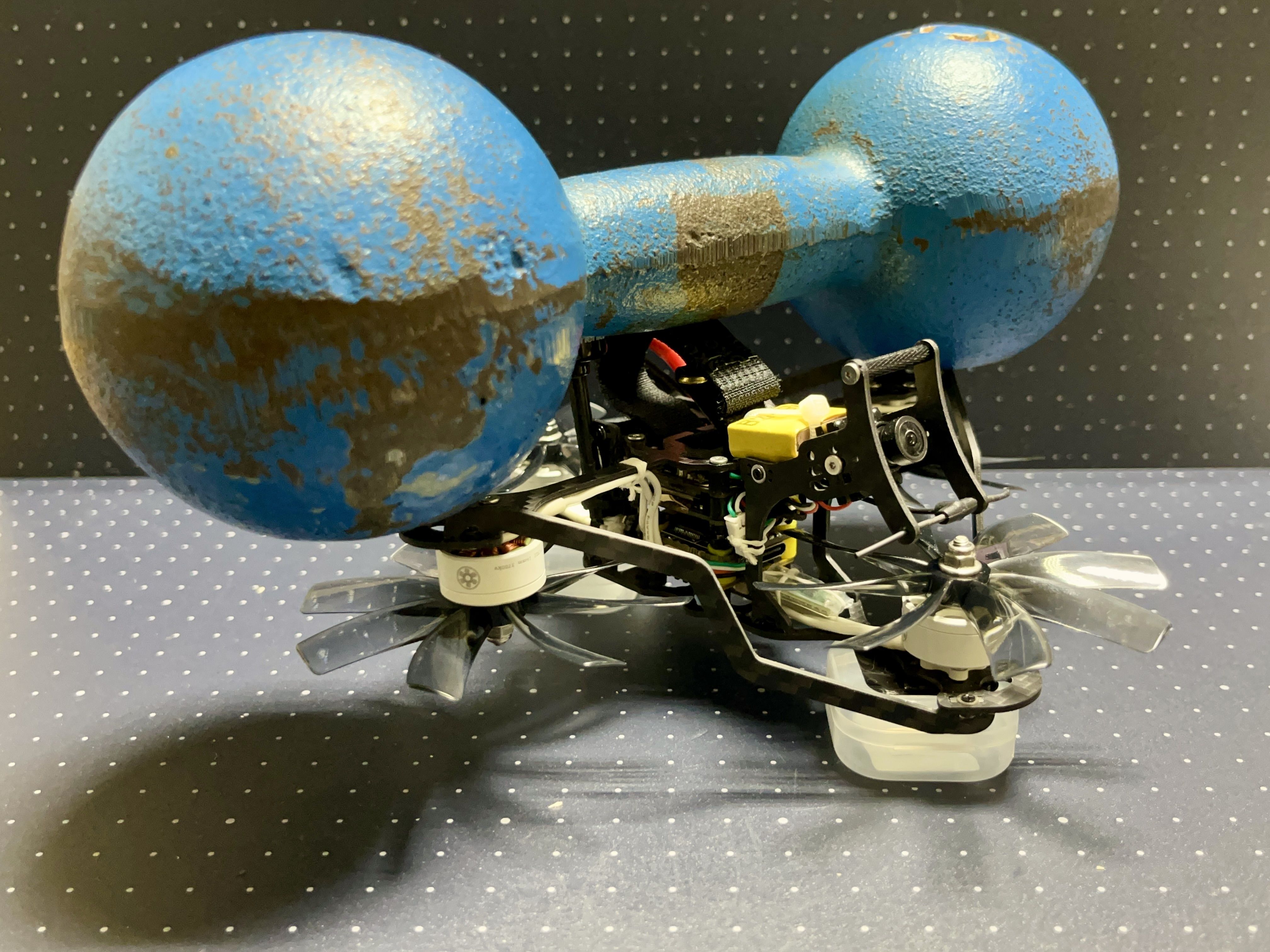
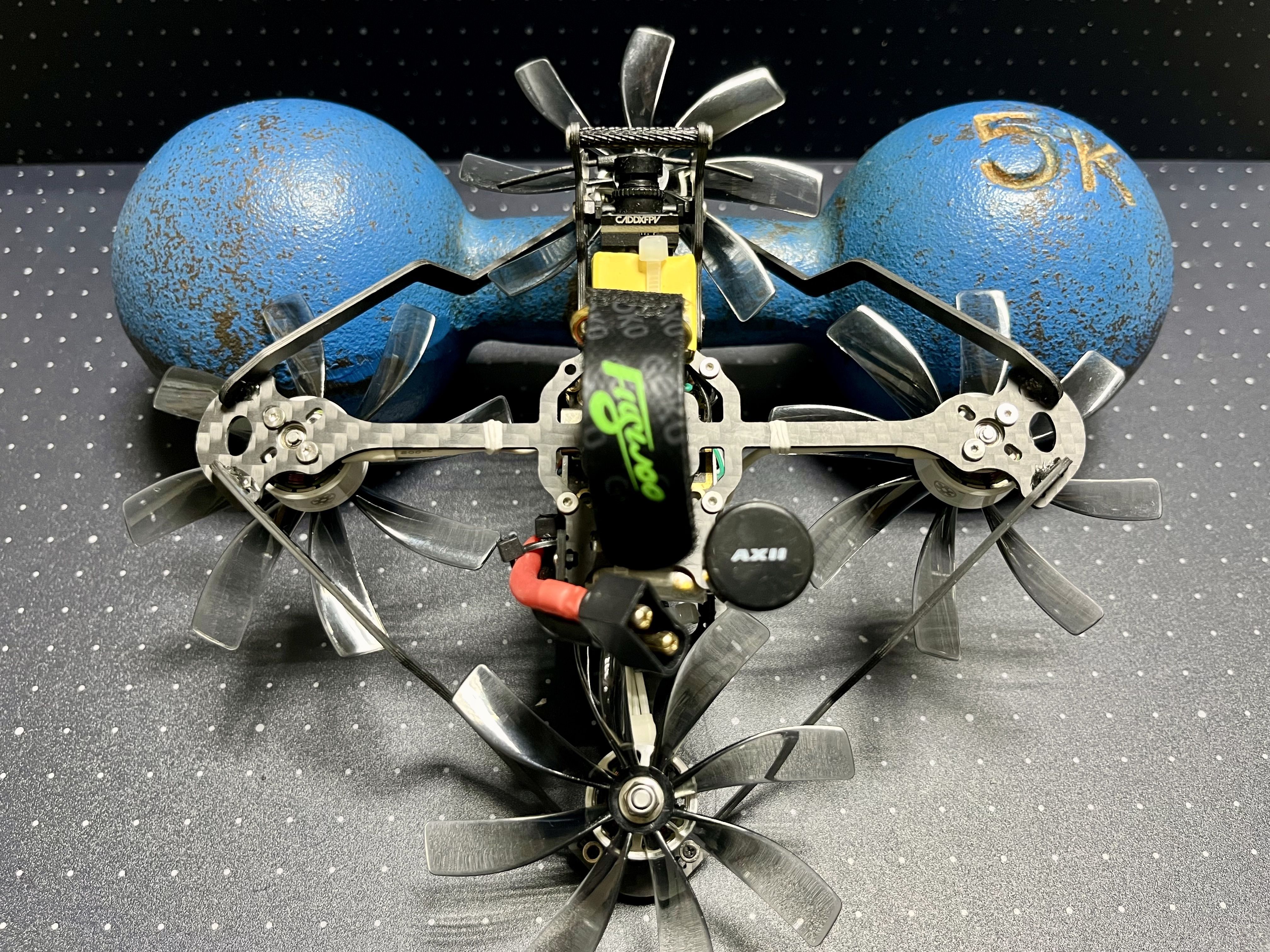
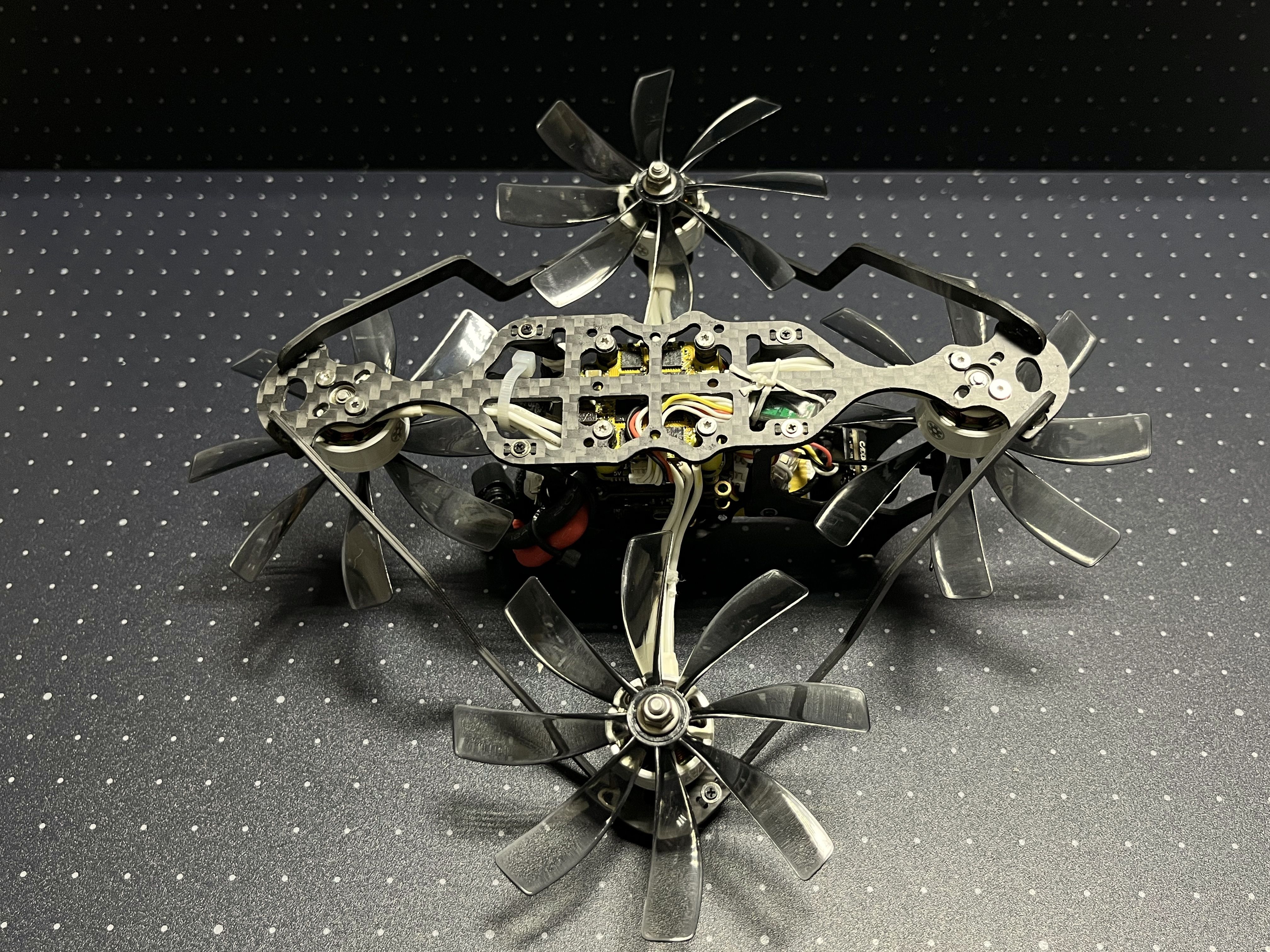
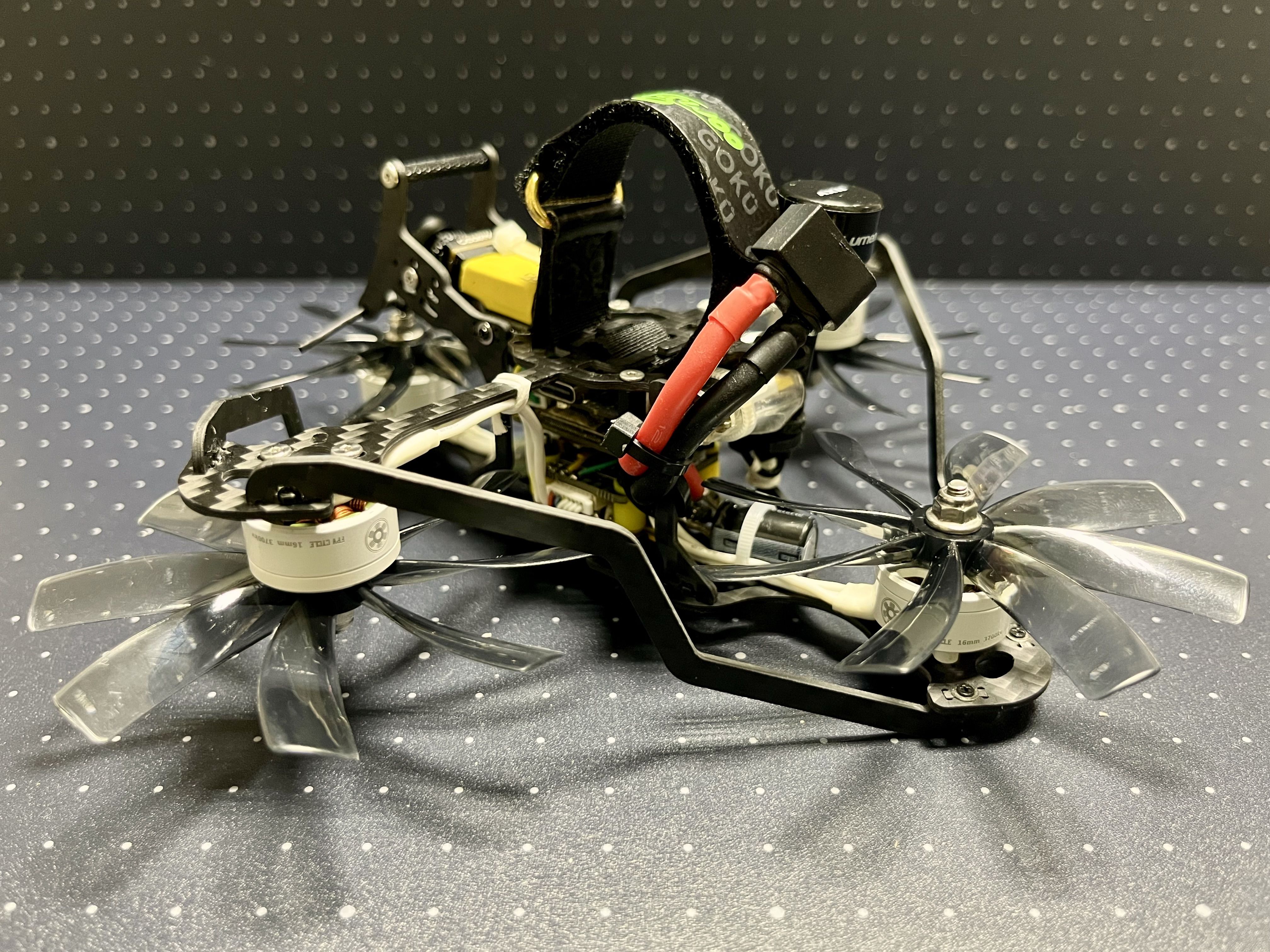
Sorry for the crazy top photo, but for those of you who saw the Tetra 2 Lite frame presented almost a year ago were probably expecting something like this. Indeed, thanks to its tetrahedral structure, this frame is very strong against vertical forces at the four motor mountings. However, because the four braces connecting the upper and lower arms are thin vertical plates, they are not strong at all against horizontal forces, which may induce horizontal frame resonance due to strong vibration of the motors and props. Therefore, it seems important to use appropriate motors and undamaged props. In this post, I present an example of such a build that behaves well enough to enjoy HD FPV in casual flight.
Design --- from 2" to 3"I have found that simply scaling up the Tetra 2 Lite frame does not work well for larger builds. This is because when scaled up, weaknesses in the frame that do not affect 2†builds become obvious.
- Thickness of the carbon plates
As far as flight performance is concerned, 1mm carbon plates are not bad. However, in actual use, FPV drones will eventually crash. Therefore, using 1mm carbon plates for a 3†build seems too risky. For me,1.5mm carbon plates are sufficient, but for racing or bando bashing, 2mm or thicker ones might better. As for 2.5" builds up to 4S for casual flight, 1mm carbon plates are sufficient. - Braces
The braces on the Tetra 2 Lite were made so that the extensions of the two adjacent braces intersect the axis of the motor between them. I thought it would be ideal to place each motor at the vertex of a tetrahedron. However, in actual builds with carbon plates, the location slightly inside from the vertex is more rigid against vertical forces. Therefore, I decided to move the motor mounting location to the inside of the intersection of the brace extensions. As the result, the braces were lengthened. - Rear standoffs
To protect upper arm from collision from above, it is desirable to add rear standoffs that also protect the stuff (FC or VTX) mounted under the upper arm.
- Frame : Tetra 3 for 20mm Wide Camera Kit (custom frame. Also designed aother version for 14mm wide camera)
Wheelbase : 124.5mm
Thickness : 1.5mm
Motor mount : φ9-12mm, 4 holes, M2
FC & VTX mount on the lower arm: 25.5x25.5mm, 20x20mm, 16x16mm, M2
FC & VTX mount on the upper arm: 25.5x25.5mm, M2
Maximum stack height : 32mm
Compatible with whoop style vertical USB connector on the upper arm
Compatible camera width : 20mm (spacers are necessary for narrower camera)
Built-in battery strap holder (can use up to 15mm width strap)
Weight : Approx. 16.2g (Carbon only); 18.0g with M1.4 hardware
- FC : JHEMCU F405 NOX V2 (very cheep, spare pads for MPU6000)
- ESC: T-Motor Cinematic F30A 6S 4IN1
- Motor : FPV Cycle 16mm 3700KV (previous version)
- Props : HQProp 76mmx8
- Weight : Approx. 150g (w/o battery)
I think M1.4 screws and nuts are strong enough for carbon plates of up to 1.5mm thickness. However, they are apt to loosen easier than M2 ones. Therefore, it should be used with Loctite or adhesive. Since the screw head diameter is only 2.5 mm, I also used M1.4 washers. As with the frame of the Tetra 2 Lite, assembly is a bit tedious, but once you get used to it, it will be easier.
This frame has enough space for the FC and ESC stack with a double-PCB HD VTX. This makes it easy to mount a variety of electronic devices.
TuningAs usual, I ran the PIDtoolbox Basement tuning in angle mode before flying it outdoors. No special tuning was required for this build.
Blackbox LogOn the test flight using a GNB 4S 650mAh 160C battery, I performed 0-100% slow throttle punches, some quick flips and rolls, and obtained a blackbox log file. I think the results are good enough to enjoy HD FPV for casual flight. In the Freq. vs Throttle Gyro-Scaled Roll chart, you can see a vague resonance, which appears as a vertical band, at about 200Hz. This weak resonance is not harmful to this build, but could be stronger in builds with higher vibrational motors and/or props.
Source: RotorBuilds.comGalerija